Thinking about buying a horse-friendly property in Acton? It can be an exciting move, but it is also very different from buying a typical home on a suburban lot. In Acton, things like zoning, water, septic, fire exposure, and trail access can shape how well a property works for your goals. If you want a place that truly supports your horses and your long-term plans, it helps to know what to check before you buy. Let’s dive in.
Why Acton feels different
Acton is an unincorporated community in the Antelope Valley Planning Area, and Los Angeles County planning materials describe it as one of the area’s rural communities. Some parts of Acton have agricultural uses and single-family homes on large lots, while other areas are still largely undeveloped and may not have the same level of infrastructure you might expect in a more built-out neighborhood.
That matters because buying in Acton often means buying into a semi-rural acreage market, not a standard subdivision experience. The Acton Community Standards District was created to help protect the area’s rural, equestrian, and agricultural character, while also preserving a multipurpose trail system and limiting urban-style infrastructure.
For you as a buyer, that means the charm of Acton often comes with added due diligence. A property may look horse-friendly at first glance, but the real question is whether the land, improvements, and utilities support that use in a practical and legal way.
Check zoning before anything else
One of the biggest mistakes buyers make is assuming that a rural-looking parcel automatically allows horses in any number. In Acton, horse ownership is governed by Los Angeles County rules and Acton-specific standards, not by a dedicated local equestrian overlay for Acton.
Los Angeles County uses lot-size thresholds for animal keeping. One residential standard allows horses and other equine on lots between 10,000 and 15,000 square feet per dwelling unit through an animal permit at one animal per 5,000 square feet, and larger qualifying lots are also measured on that same basis.
The key takeaway is simple: acreage alone is not enough. You need to confirm the exact zoning, any overlay district, and whether prior permits affect what is currently allowed on the property.
What to verify with zoning
Before you move forward, make sure you confirm:
- The exact zoning designation
- Any overlay districts or community standards that apply
- How many horses or other equine are allowed
- Whether an animal permit is required
- Whether existing horse improvements match current approvals
This step can save you from expensive surprises later, especially if you plan to add stalls, expand facilities, or adjust how the property is used.
Review barns, arenas, and outbuildings
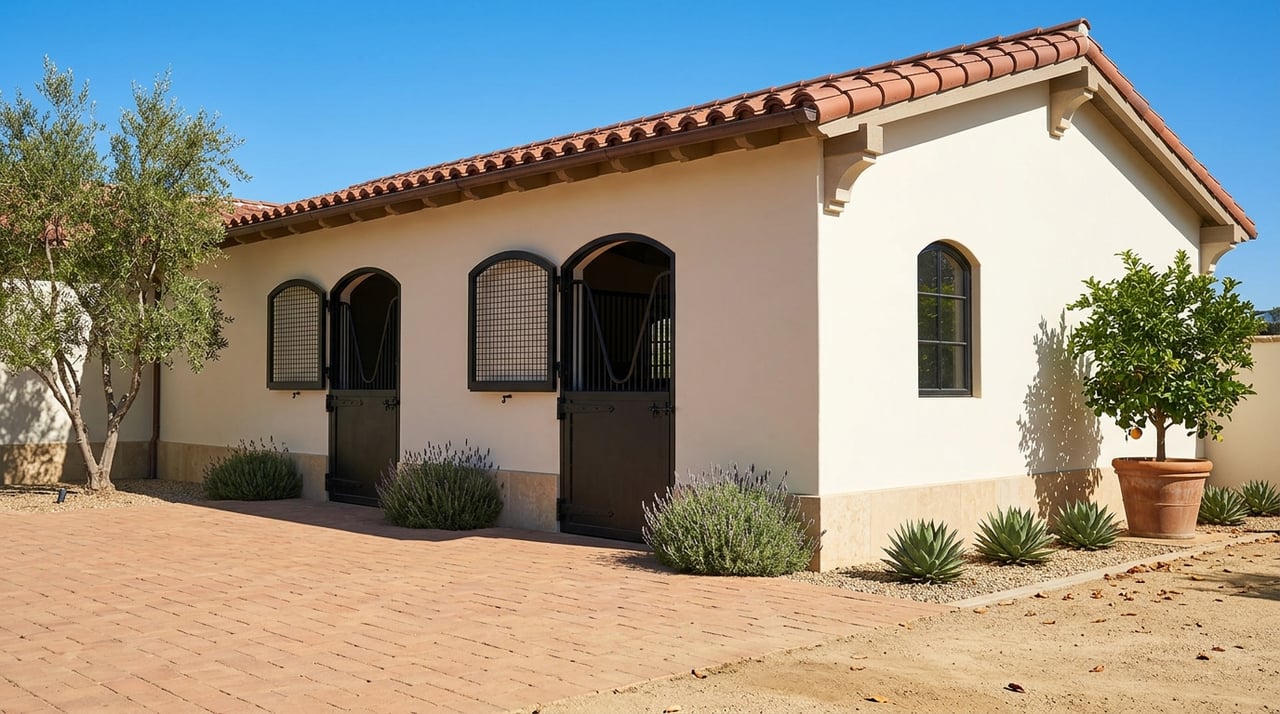
On horse property, the house is only part of the story. Barns, sheds, corrals, arenas, grading pads, fencing, and storage areas can be just as important, and those features should be reviewed carefully.
Acton’s Community Standards District adds review triggers that matter for horse buyers. New structures or additions that cumulatively add at least 400 square feet to the footprint of a primary or accessory structure require an application and review process. On lots of one acre or more, removing or destroying more than 10 percent of native vegetation within any 12-month period requires a Minor Conditional Use Permit.
The standards also say equestrian uses such as stables and arenas may be accommodated if they do not create erosion or flooding hazards. That means a beautiful setup still needs to work with the site’s drainage and environmental conditions.
Why permit history matters
Do not assume every existing improvement is legal just because it is already there. Many larger accessory structures still require permits, even though very small detached sheds may be exempt under the county building code.
Ask for permit records and final approvals for:
- Barns
- Tack rooms
- Sheds
- Corrals
- Arenas
- Fences
- Pads
- Feed or equipment storage areas
If a seller cannot clearly document major improvements, that should become a deeper due-diligence conversation before closing.
Confirm the water source
Water is one of the most important questions you can ask when buying horse property in Acton. Los Angeles County Public Works says Waterworks District 37 serves about 6,500 people through roughly 1,400 metered connections, with supply coming mostly from groundwater wells supplemented by imported State Water Project water.
At the same time, some parcels outside District 37 have used local wells and, in some cases, hauled water. So even if two properties share the same general area or mailing address, their water situations may be very different.
For that reason, you should verify the water source parcel by parcel. If horses are part of your plan, you want to understand not just where the water comes from, but also what service arrangement is in place today.
Water questions worth asking
Ask these questions early in the process:
- Is the property inside Waterworks District 37?
- Does it rely on a private well?
- Is there another water arrangement in place?
- What is the current service setup?
- Is there enough capacity for the property’s intended use?
A horse property without a clear water picture can quickly become more complicated and more costly than expected.
Understand septic and wastewater limits
In semi-rural areas like Acton, sewer service is not always a given. Los Angeles County Public Health notes that onsite wastewater treatment systems, often called septic systems, are commonly used in suburban and rural locations in unincorporated county areas.
That makes it important to verify whether a property is connected to sewer or uses an onsite wastewater treatment system. If it has septic, future changes to your barn area, paddocks, wash rack, or additional structures could affect or be affected by the septic tank, leach field, or reserve area.
This is one of those details that can easily be overlooked when you are focused on acreage and views. But a property that works well for horses also needs enough functional space for wastewater components and future improvements.
Pay close attention to fire exposure
Fire exposure is a major site condition in Acton. County planning materials note that parts of the community are subject to Very High Fire Hazard Severity Zones, and state fire officials provide address-based tools to identify mapped hazard levels.
For a buyer, this should be part of early property screening, not a last-minute concern. Fire hazard zones can influence how buildings are constructed and protected, and they may affect the work needed to maintain the property over time.
Site features to review
When you look at horse property in Acton, pay attention to:
- Driveway access
- Turnaround space
- Defensible-space needs
- Vegetation management
- Home-hardening features already in place
These details matter for daily use, emergency access, and future upkeep. They can also help you understand the full picture of ownership before you commit.
Plan for drainage and manure management
A horse property is not just about where the horses stay. It is also about how the site functions after rain, during hot weather, and through everyday maintenance.
Los Angeles County Public Health’s vector-management work includes manure storage and disposal, drainage conditions, toilet facilities, and sewage disposal on animal-keeper properties. In practical terms, that means drainage and manure handling are part of the property’s operating reality.
If you are comparing properties, look beyond the number of stalls or the size of the arena. A usable setup should also give you a workable plan for runoff control, manure storage, and overall site maintenance.
Look closely at trail access
Trail access is one of Acton’s biggest draws for horse buyers, but it is important to be specific. Los Angeles County Trails identifies the Acton Community Trail, the Acton Agua Dulce Library Trail, and the nearby Vasquez Loop Trail as allowing horseback riding. At the same time, some nearby trails are hiking-only, so access should always be confirmed trail by trail.
This is where a property’s location can be appealing, but the details still matter. Being near a trail is not the same thing as having practical or legal access to it.
Ask what kind of access exists
When evaluating a property, ask whether access is:
- A public trail connection
- A recorded easement
- A neighborhood riding corridor
- A subdivision-related obligation
These are not interchangeable. Acton’s standards also address how trails tied to land division are handled, including maintenance financing mechanisms before construction begins, which can matter if you are considering acreage with future development potential.
A smart due-diligence checklist
If you want a horse-friendly property in Acton that fits both your lifestyle and your long-term plans, keep your due diligence focused on the basics that matter most.
Use this checklist as a starting point:
- Confirm whether the parcel is inside Waterworks District 37, on a private well, or served another way
- Verify the exact zoning, overlays, and lot-size rules that control horse keeping
- Ask for permits and final approvals for barns, sheds, corrals, arenas, pads, fences, and related improvements
- Check whether the property is in a Fire Hazard Severity Zone
- Determine whether the property uses sewer or an onsite wastewater treatment system
- Ask whether trail access is public, private, or tied to a recorded easement or subdivision condition
- Review drainage and manure-management expectations before assuming the property will be easy to operate
Why local guidance matters
Buying horse-friendly property in Acton often involves more moving parts than buying a standard home. You are not just evaluating bedrooms and square footage. You are also looking at land use, infrastructure, site conditions, and how the property will function day to day.
That is where local experience can make a real difference. When you work with someone who understands acreage, semi-rural property questions, and the Antelope Valley market, you can move forward with more clarity and confidence.
If you are exploring horse-friendly property in Acton or nearby acreage in the Antelope Valley, Paula Stafford offers hands-on guidance with a personal touch to help you evaluate your options and make a smart move.
FAQs
What makes Acton different from a typical suburban housing market?
- Acton is a semi-rural community where large lots, agricultural uses, undeveloped land, and varying infrastructure can make property review more complex than in a standard subdivision.
How do horse rules work for property in Acton?
- Horse keeping in Acton is controlled by Los Angeles County zoning and animal-keeping rules, along with Acton-specific community standards, so you need to verify the exact parcel rules before you buy.
Why should buyers verify permits for horse improvements in Acton?
- Barns, sheds, corrals, arenas, fences, and other improvements may require permits or review, so checking records helps you confirm that existing features were properly approved.
What water questions should buyers ask about Acton horse property?
- You should confirm whether the parcel is served by Waterworks District 37, a private well, or another arrangement, and ask about the current source and service setup.
Why is septic important when buying horse property in Acton?
- Many semi-rural properties use onsite wastewater treatment systems, so buyers should confirm whether septic components could affect future improvements or the usable layout of the site.
How does fire hazard affect horse property in Acton?
- Parts of Acton are in higher fire hazard areas, so buyers should review mapped hazard levels, driveway access, defensible-space needs, and home-hardening considerations early in the process.
Does every trail near Acton allow horseback riding?
- No. Some local trails allow horseback riding, while others are hiking-only, so trail use and access should be confirmed for each specific trail.
What is the most important takeaway for buying horse-friendly property in Acton?
- The most important step is thorough due diligence, because zoning, water, septic, fire conditions, permits, drainage, and trail access all affect whether a property truly works for your needs.